
Meet Your Succulents
Every succulent has its own little personality. Some look like flowers, some grow into miniature trees, and others could almost disappear among a handful of pebbles. Learning your plant’s name is a lovely first step toward understanding what makes it feel at home.
Echeveria — rosettes full of color
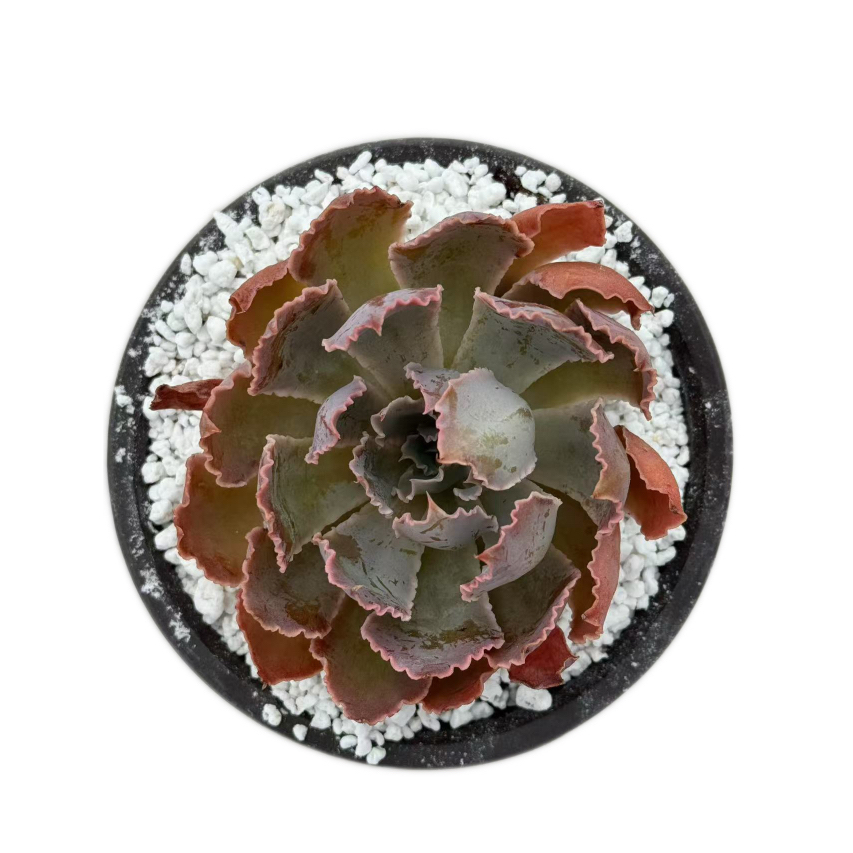
Echeveria ‘Sunset Dance’ — Colorful rose-shaped rosette
Echeverias form neat, rose-shaped rosettes in shades of green, blue, pink, and purple. Many carry a delicate powdery coating called farina; handle their leaves gently so it stays intact. Give them bright light, introduce stronger sun gradually, and let a well-draining potting mix dry between waterings.
Aeonium — a small tree with a big personality
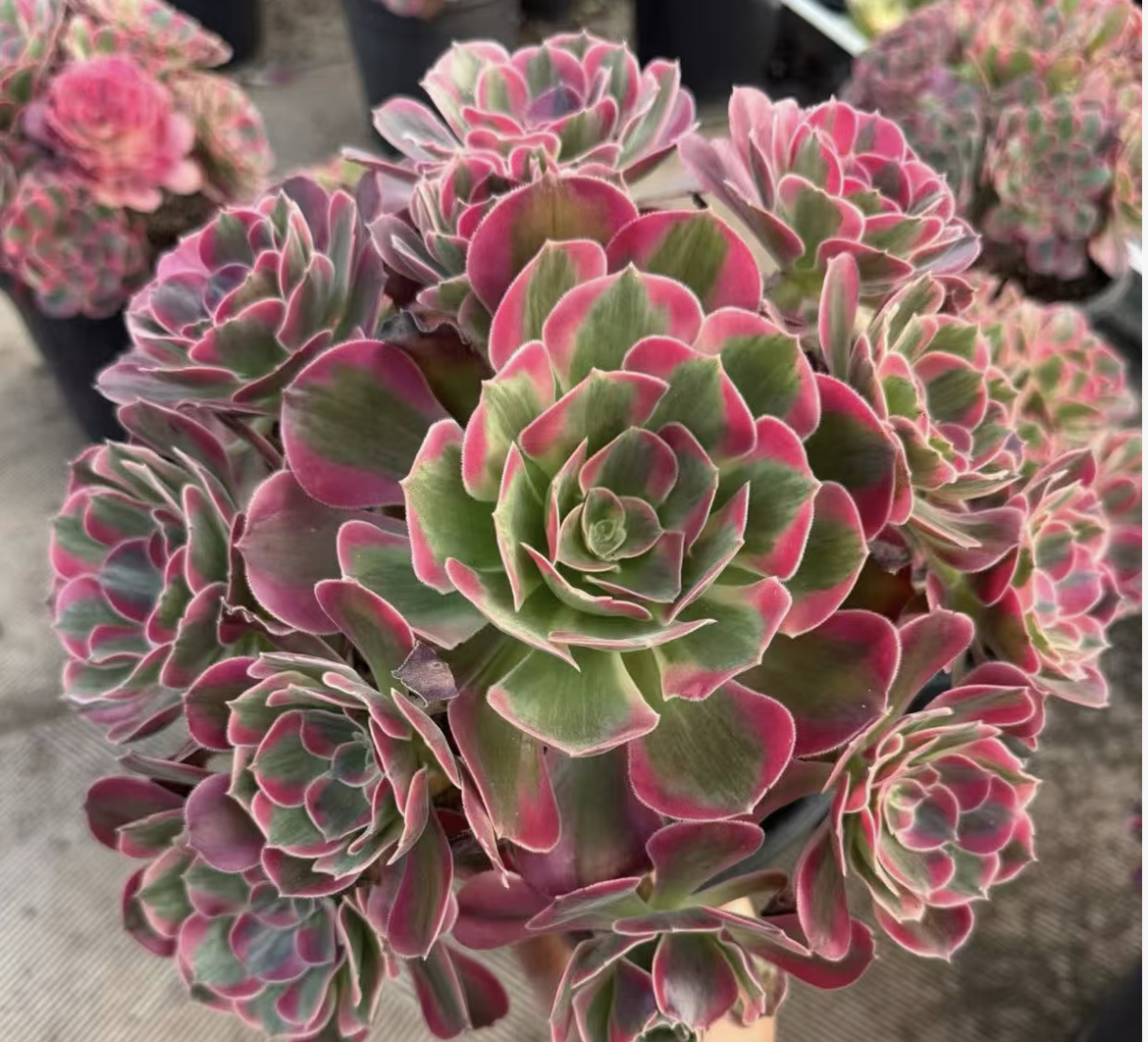
Aeonium ‘Pink Witch’ — Rosettes on branching stems
Aeoniums often carry rosettes at the ends of branching stems. They usually enjoy mild weather and may slow down in summer heat, closing their rosettes and shedding older leaves. During this rest, offer bright, sheltered light and reduce watering rather than trying to force new growth.
Haworthia — little windows and gentle light

Haworthia cooperi — Translucent leaf tips
Photo: Krzysztof Ziarnek, Kenraiz · CC BY-SA 4.0 · unmodified
Some Haworthias have translucent leaf tips that look like tiny windows. The striped plants often sold as zebra Haworthia are commonly classified as Haworthiopsis. These compact plants generally appreciate bright, indirect light. They tolerate less direct sun than many colorful rosettes, but a dark corner is still too dim.
Graptopetalum and Graptoveria — plump leaves and trailing stems
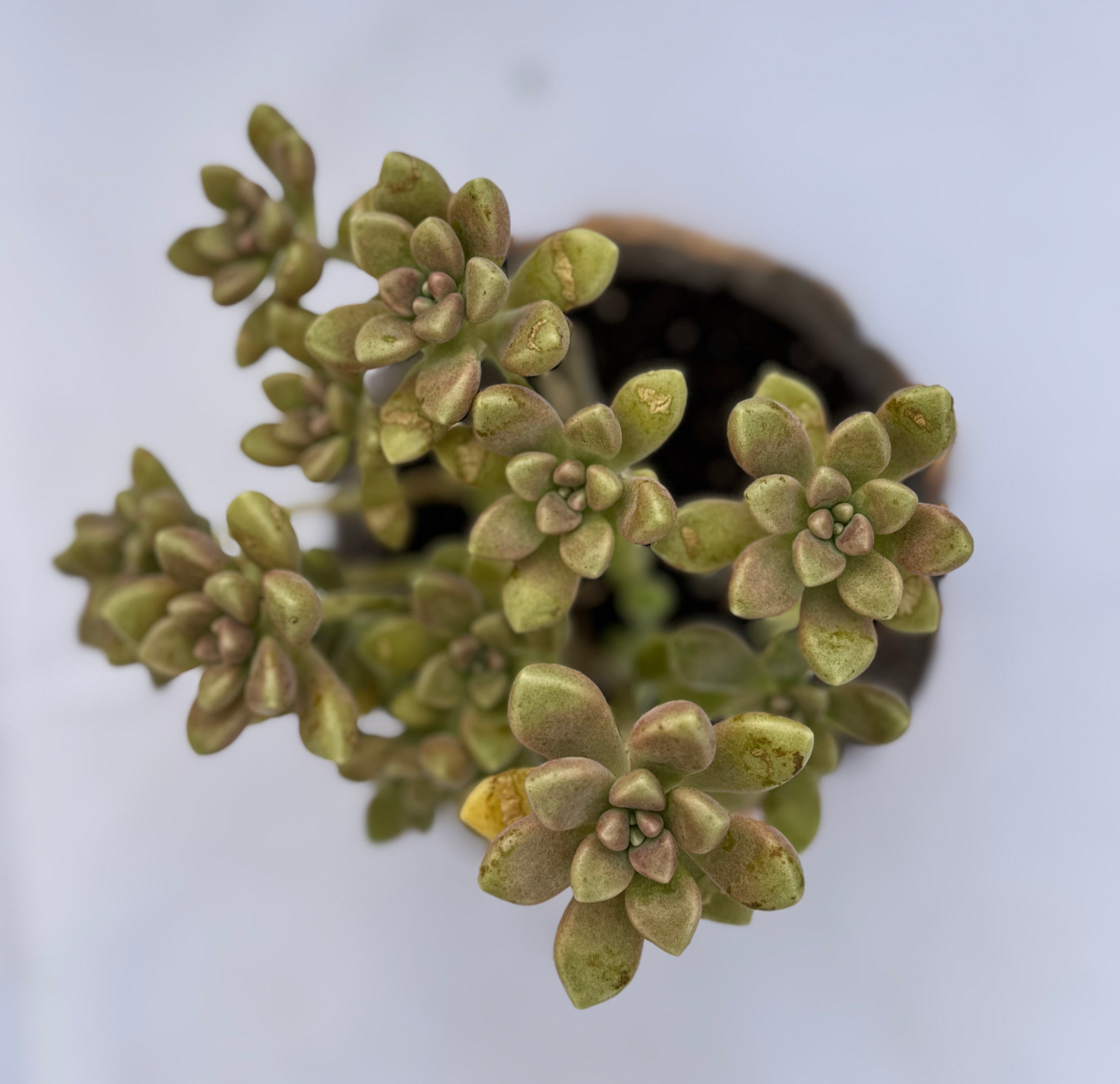
Graptopetalum mendozae — Plump leaves and offsets
Their fleshy leaves and branching growth make these plants charming in clusters. Graptoveria is a hybrid group combining Graptopetalum and Echeveria. Many can be propagated from healthy leaves, although success varies. Give them good light, drainage, and time to settle into their new home.
Sempervivum — hardy hens and chicks

Sempervivum tectorum — A parent rosette with smaller “chicks”
Photo: Terragio67 · CC BY-SA 4.0 · unmodified
These rosettes produce little offsets, or “chicks,” around a parent plant. Many varieties are cold hardy and suit outdoor rock gardens. Check the hardiness of your particular variety; sharp drainage matters even in winter. Hardy does not mean happy in a waterlogged pot.
Lithops — the living stones

Lithops — living stones — Paired leaves that resemble pebbles
Photo: Tangopaso · Public domain · unmodified
Lithops look like patterned pebbles and follow a special seasonal watering cycle. While a new leaf pair develops, the old pair supplies stored moisture. They need a different routine from ordinary rosette succulents, so keep them in their own pot and learn their cycle before watering.
Choose a plant that suits your light and your space. You do not need a large collection to enjoy growing—one little plant, watched with care, is a wonderful beginning.